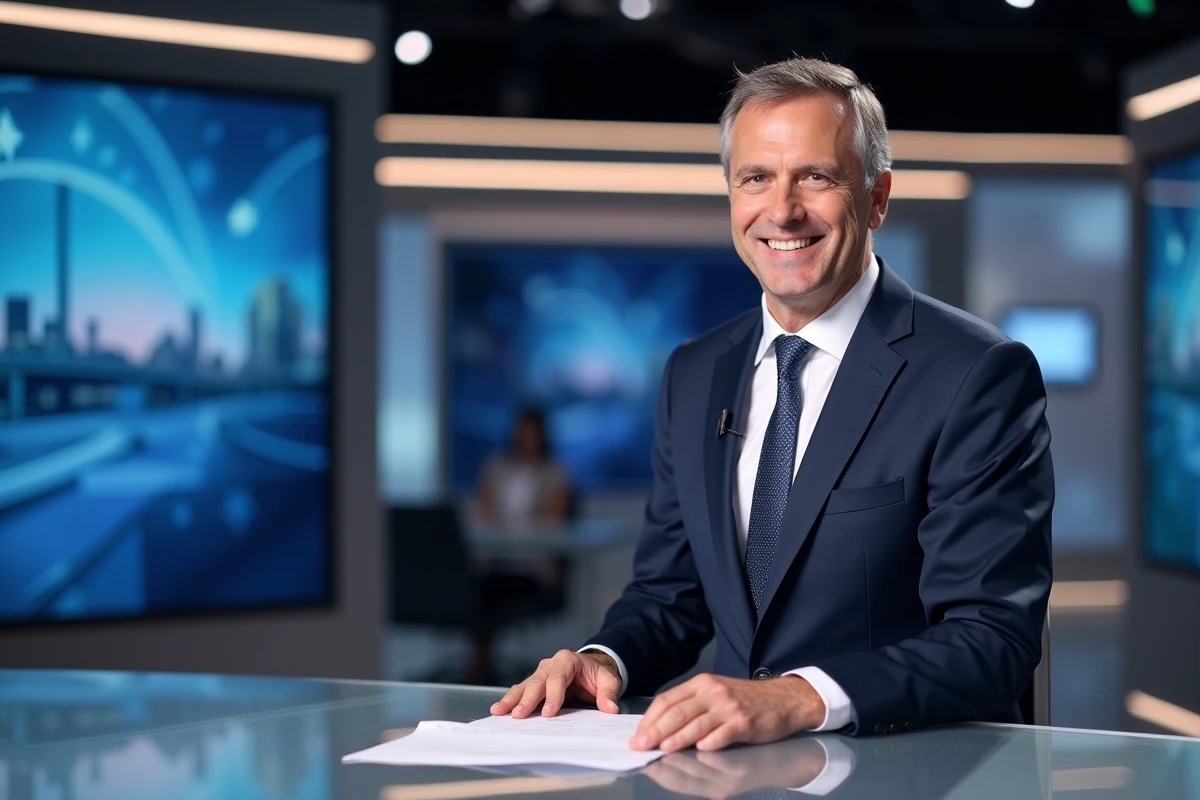
A raw figure, a lack of scale, and curiosity is already piqued: how much does a TV presenter on TF1 really earn? Money flows abundantly for some, while it remains discreet for others. Behind the spotlight, the question of salaries divides, fascinates, and sometimes disturbs. Between fame, seniority, and the profitability of shows, the disparities are striking, and transparency remains a promise never kept. Television hosts navigate a shifting landscape, torn between public prestige and private negotiations. Income inequalities persist, with women and men still not treated equally, despite official rhetoric on pay equality.
TV presenter salaries in France: an overview and realities of the sector
In the French audiovisual sector, the faces that appear every evening in our living rooms hide disparate financial realities. Contrary to popular belief, the salary of a TV presenter on TF1 varies greatly, depending on seniority, the type of show, and of course, visibility on air. For regular figures, the range stretches from 7,000 to 35,000 euros gross per month, a sum that increases for those positioned in strategic slots.
The hierarchy is evident: the headliners weigh heavily, while many substitutes or secondary presenters, often on precarious contracts, stagnate at levels barely above the national average. In addition to the fixed salary, some earn additional income through advertising or publishing projects, a windfall that is never distributed fairly.
In the absence of a transparent framework, everything is negotiable. The strength of a presenter lies in their audience, but also in their ability to build and defend their image. Showing the figures lifts the curtain on logics far removed from simple merit, where influence and media weight often make the difference.
How much do TF1 stars really earn? Figures, disparities, and revelations about key presenters
Let’s move from shadow to light: some star presenters on TF1 enjoy salaries that defy imagination. According to consistent information, their monthly salaries sometimes range between 30,000 and 50,000 euros gross, with peaks sometimes well beyond depending on contracts signed over time and audience successes.
To illustrate this picture, here are some telling examples:
- Jean-Luc Reichmann, the iconic face of “Les 12 coups de midi,” approaches 50,000 euros monthly, with additional outside income.
- Nikos Aliagas, an undisputed pillar of “Star Academy,” falls between 35,000 and 45,000 euros depending on the season and special events.
- Denis Brogniart, who helms “Koh-Lanta,” nears 40,000 euros monthly in the best years.
Profiles like Jean-Pierre Pernaut sometimes reached 50,000 euros, a form of recognition. Others, such as Harry Roselmack or Bruno Roblès, operate in the range of 20,000 to 30,000 euros each month; proof that high exposure remains the determining lever during negotiations.
While “stardom” comes at a high price, the majority of presenters never reach these heights. The reality on the ground is a handful of privileged individuals and the vast army of the invisible, condemned to only modest raises and fighting to carve out their place.

Persistent inequalities: why transparency and pay equality remain major challenges in television
For now, it is impossible to speak of any salary transparency on French television. The golden rule is confidentiality, embedded in contracts, cultivated in the hallways, rarely shaken by leaks. This opacity primarily protects high earners and keeps the majority in uncertainty.
The distribution of salaries has remained highly concentrated in favor of a few dominant figures. This, even as budgetary caution increasingly imposes more restrictions and a stringent selection of profiles aired.
These observations help to better understand the extent of the disparities:
- Differences in remuneration that do not correspond to experience or necessarily to actual impact.
- A real difficulty in obtaining clear answers about exact amounts, with fear of repercussions often taking precedence.
- Negotiations often guided by notoriety, to the detriment of any public scale or rational criteria.
Additionally, there are persistent divides between men and women, the fragile situation of newcomers, and the unique fate reserved for reality TV candidates: all signals that question the fairness of the system. A few stars occupy the spotlight, but the vast majority must settle for limited prospects and strive to exist in an industry where the light only illuminates a minority. Television, under its spotlights, stages a reality whose backstage remains almost inaccessible. Until the day one of them decides, perhaps, to reveal everything.