
The A75 alone concentrates most of the myths surrounding toll-free road trips in France. This route, often presented as completely free, actually includes a toll section at the Millau Viaduct, with rates varying depending on the season and vehicle category. Setting off with a map of free highways without incorporating these exceptions is to build an itinerary on a false basis.
Free sections in France: cartographic reading and real limits
The majority of free highway sections in France are located in urban peripheries. These are ring road or metropolitan connection sections, not long-distance routes. Confusing these portions with a continuous toll-free network leads to significant detours or forced returns to toll roads.
The A75, connecting Paris to Béziers via Clermont-Ferrand, remains the only predominantly free route over a long distance. We recommend considering it as a complement to a mixed journey rather than a complete alternative to toll highways. Additionally, you will find travel tips on Pulsion Laval to structure an itinerary combining free sections and national roads.
The map of free highways becomes more relevant when used as a tool for itinerary preparation, not just as a simple list of routes. Identifying free portions in advance allows for anticipating junctions with the toll network and evaluating the real additional cost of a 100% toll-free journey, particularly in terms of extra driving time.
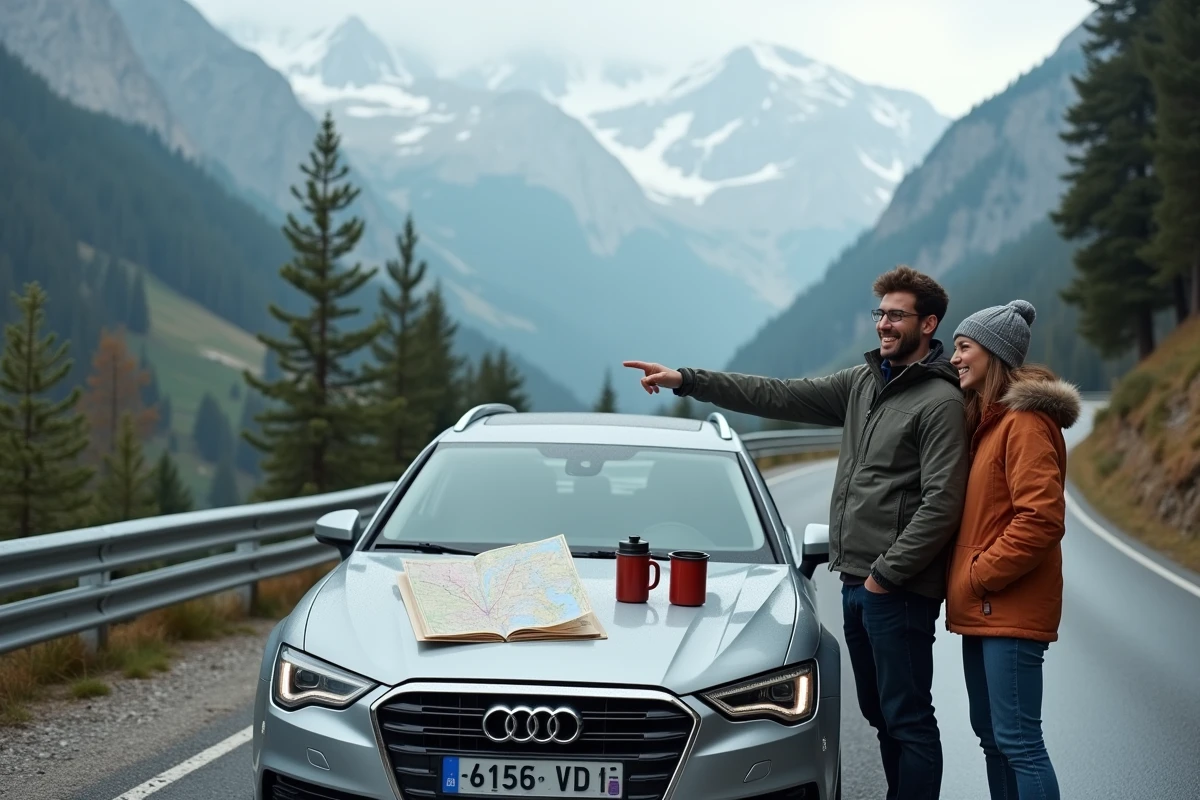
National and departmental roads: the true network for an economical road trip
Relying solely on free highways means ignoring the network that truly supports a toll-free road trip: the national and departmental roads. In France, these routes cover almost the entire territory and pass through areas that the highway bypasses by definition.
The difference in travel time between a national road and a toll highway is often overestimated over medium distances. On a journey of several hundred kilometers, the gap significantly reduces when accounting for stops at tolls and the exit to accommodations, often located away from the highway network.
We observe that the most successful itineraries combine three types of roads:
- Free highway sections on the outskirts of major urban areas, to quickly cross dense urban zones
- Two-lane national roads on intermediate segments, which offer a good speed-comfort compromise without toll costs
- Departmental roads on scenic portions or access to stops, where reduced speed becomes an asset for discovery
This mixed approach transforms the journey into a component of the trip rather than just a transit.
Planning breaks on a toll-free itinerary: a safety issue
Rest areas are less frequent and less equipped off the toll highways. This is a point that most road trip guides overlook. On a toll highway, a service area appears at regular intervals on average. On a national road or a free section, the spacing can double or even triple.
The General Directorate of Transport has recommended since summer 2024 to check in real-time which rest areas are open via dedicated apps. This precaution is particularly relevant for van or camper journeys, where the need for secure parking and services (water, waste disposal) conditions the itinerary.
Here are some planning rules that we systematically apply:
- Identify gas stations on the map before departure, checking their opening hours (many close on Sundays on secondary routes)
- Allow for sufficient fuel margin to cover at least two segments between identified rest areas
- Avoid nighttime stops at isolated areas along less frequented sections, especially during high tourist season
- Incorporate village stops as alternatives to traditional rest areas, with access to shops and monitored parking

Real budget of a toll-free road trip: what the gross calculation doesn’t show
The toll budget represents a visible and easy-to-remove item on paper. In reality, a toll-free itinerary almost always increases fuel consumption. Stops, restarts, speed variations, and detours extend the mileage and put more strain on the vehicle.
On a multi-day road trip, the difference in consumption between a smooth highway journey and a mixed national-departmental route can offset a significant portion of the savings made on tolls. This observation is particularly true for heavy vehicles (vans, campers) whose consumption increases significantly in urban or semi-urban driving.
The real lever for savings on a road trip in France does not lie in the systematic avoidance of tolls. It lies in intelligent arbitration between free sections and strategic paid sections. Paying a toll on a short stretch to avoid an hour of detour can prove to be more economical overall, including fuel and wear.
Planning a toll-free road trip requires more preparation than a standard journey. Map of free sections, location of rest areas, estimation of fuel overconsumption: these three parameters, cross-referenced before departure, allow for constructing a genuinely advantageous itinerary rather than a route that is free on paper but costly in practice.