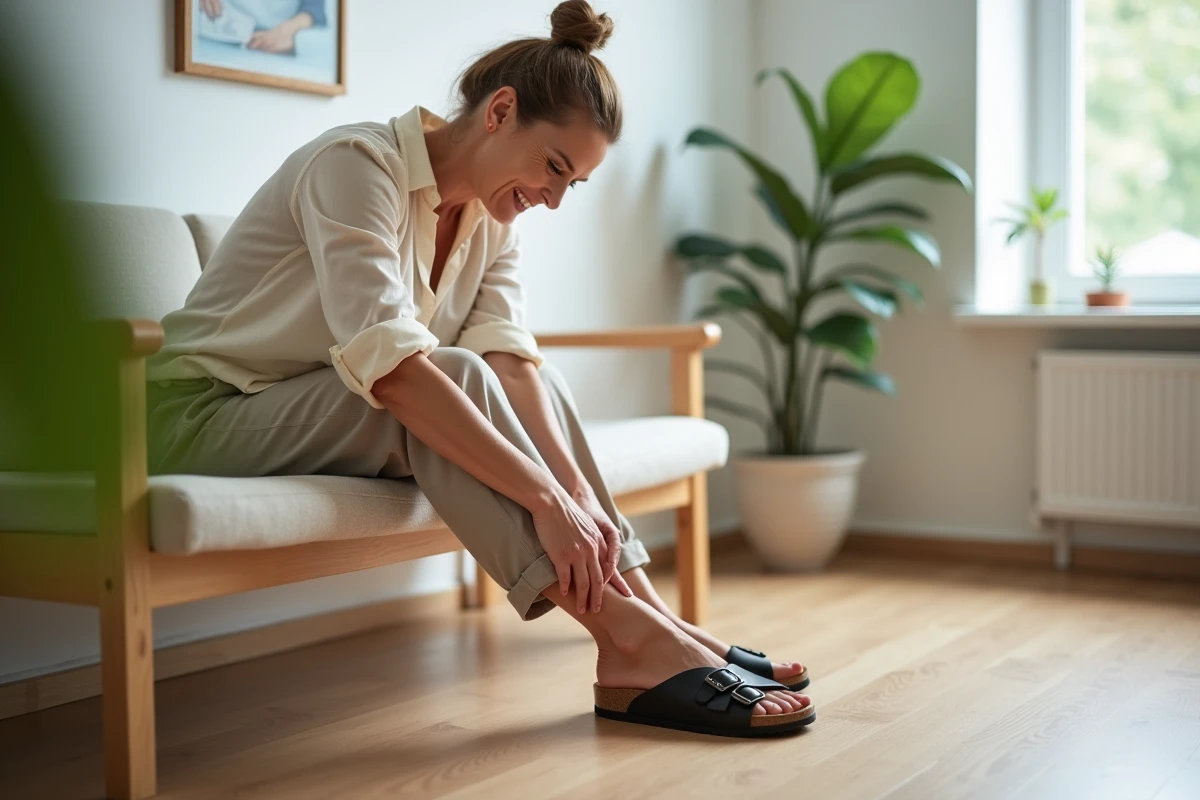
Plantar fasciitis refers to inflammation of the fascia, the fibrous band that connects the heel to the toes and absorbs shocks with each step. The choice of a sandal to relieve this pain is based on specific biomechanical criteria, not on the reputation of a brand. Birkenstock and Billowy offer two distinct approaches to foot support, with very different consequences for the pathological foot.
Controlled stiffness of the sole: the criterion that most comparisons ignore
Recent recommendations in rheumatology and sports medicine place controlled stiffness of the sole at the center of the treatment for plantar fasciitis. A sandal that is too soft at the forefoot exacerbates micro-traumas to the fascia with each flexion of the foot during walking.
Birkenstock uses a cork and latex sole that maintains limited flexion. This mechanical resistance reduces the load placed on the fascia during the propulsion phase. Billowy, on the other hand, relies on soft and immediate cushioning that provides a feeling of comfort as soon as you put them on, but allows the forefoot to flex more.
To understand the difference between Billowy and Birkenstock on this point, one must observe the behavior of the sole while walking, not in a static position. A sandal that seems comfortable while standing can prove detrimental after an hour of walking if it does not offer that stiffness at the front.
A soft sole exacerbates micro-traumas to the fascia, even if the immediate sensation is pleasant. Perceived comfort and therapeutic benefit do not always coincide.

Birkenstock anatomical sole and plantar fasciitis: documented limits
Birkenstock has been the subject of published clinical studies showing a measurable impact on the distribution of plantar pressures and posture. This scientific basis is lacking on the Billowy side, which does not have equivalent data to date.
This observation does not make Birkenstock a universal solution. In recent years, several podiatrists have reported that the standard anatomical footbed of the German brand does not suit all profiles of plantar fasciitis. Two cases pose a problem:
- Feet with a very high arch, for which the arch of the Birkenstock footbed can create an uncomfortable pressure point instead of providing relief
- Individuals suffering from heel hypersensitivity, for whom the rigid cork cup amplifies pain instead of cushioning it
- Patients already wearing a custom thermoformed orthosis, who require a sole that is deep and stable enough to accommodate the orthosis without the foot floating
For these profiles, a softer model like certain Billowy sandals can offer temporary relief. The nuance lies in the duration: short-term relief does not equate to effective mechanical treatment over several weeks.
Compatibility with a foot orthosis: the true selection criterion
Recent updates to recommendations in sports medicine emphasize that the determining criterion is not the brand but compatibility with a custom orthosis. A sandal suitable for plantar fasciitis must be able to accommodate a thermoformed orthopedic insole without compromising foot stability.
This requires three technical characteristics:
- A heel cup that is deep enough to keep the orthosis in place during walking
- A sole width that does not compress the foot once the orthosis is inserted
- A retention system (strap, adjustable buckle) that prevents the foot from sliding laterally
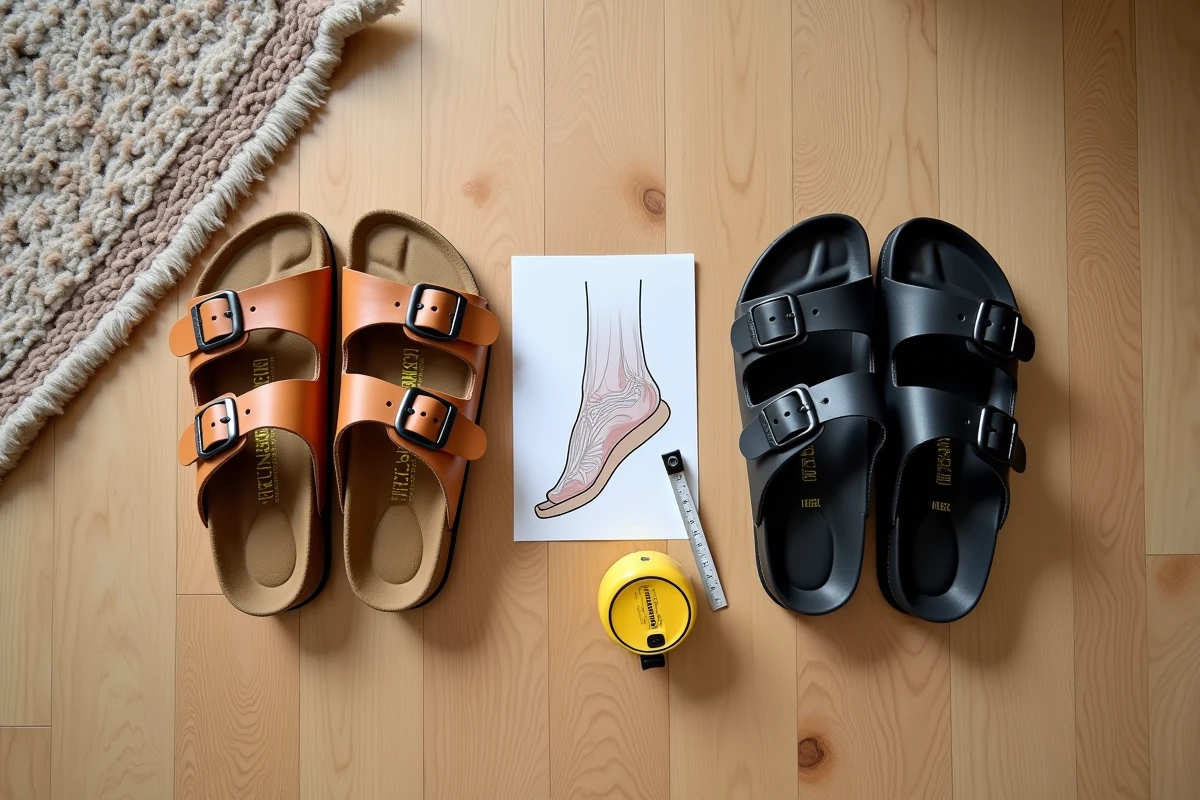
In this regard, Birkenstock models with removable soles have the advantage. Their cork footbed can be removed on certain models, making room for a custom orthosis. At Billowy, the sole is generally glued and non-removable, which limits this option.
The trap of immediate comfort
Billowy appeals with cushioning that is noticeable from the first minutes. This softness is suitable for healthy feet or light indoor use. For a foot affected by plantar fasciitis, immediate comfort masks the lack of structural support.
The fascia needs a stable surface that limits its tension, not a cushion that compresses under the body’s weight. The distinction between passive cushioning (soft foam) and active support (molded rigid sole) determines the therapeutic effectiveness of the sandal.
Sandals for plantar fasciitis: which profile for which brand
Birkenstock remains relevant for individuals whose arch corresponds to the standard curvature of the footbed, who walk regularly, and who seek mechanical support for the fascia. The brand is also the best choice if a custom orthosis needs to be inserted into the sandal.
Billowy finds its place among those looking for a lightweight sandal for occasional indoor use, or among those whose budget does not allow for investing in a Birkenstock model. The value for money of Billowy remains a valid argument when the pathology is mild or in a phase of remission.
No sandal replaces a podiatric diagnosis. Plantar fasciitis varies in intensity, location, and biomechanical cause from patient to patient. A sandal that relieves a flexible flat foot may worsen a rigid high arch foot, regardless of the brand on the strap.