
A fashion accessory refers to any clothing item added to a basic outfit to alter its visual perception: bag, belt, jewelry, scarf, glasses, watch. Its role is not limited to decoration. It structures the silhouette, directs the gaze, and allows for style variation without replacing the main pieces of the wardrobe.
Textile Regulation and Fashion Accessory Choices in 2026
The legal framework surrounding fashion has changed significantly in recent months, directly influencing how accessories are selected. Since September 1, 2026, repairability has become a regulatory criterion for textile products in France. The measure targets brands that rely on the very rapid turnover of collections.
French law now prohibits advertising for fast fashion, including campaigns run by influencers. The origin and business model of a brand are as important as the aesthetics of a piece. Choosing a scarf or a belt also means validating the production chain behind it.
On the European side, large companies can no longer destroy certain unsold textile items (clothing and shoes) since July 19, 2026. Accessories related to these categories are directed towards donation, clearance, or recycling.
European regulation 2024/1781 also provides for a digital passport for textile products, which will give access to the composition, origin, and repairability of each piece. This context encourages prioritizing durable, traceable, and repairable accessories over disposable items bought on a whim.
To delve deeper into these selection criteria, the sheets provided by the Fashionova site for fashion accessories detail the materials and uses piece by piece.

Materials and Durability: What Distinguishes a Useful Accessory from a Lost Purchase
The material of an accessory determines its longevity, comfort, and ability to age well. A full-grain leather bag develops a patina over time. A low-quality faux leather bag cracks after a few months. The difference in purchase cost quickly disappears when you relate the price to the number of outings.
A durable accessory can be recognized by three indicators: the density of the fabric or leather, the quality of the finishes (stitching, clasps, hinges), and the possibility of having it repaired. On a belt, check the buckle: a screwed buckle can be replaced, while a glued buckle condemns the entire piece.
- Brass and stainless steel resist oxidation and are suitable for everyday jewelry, unlike plated alloys that tarnish quickly.
- Silk and merino wool provide good longevity for scarves and shawls, provided they are properly maintained (cold wash, flat drying).
- Eyewear frames made from plant-based acetate are more flexible and resistant to shocks than standard injected plastic.
Before buying, ask yourself a simple question: will this piece still be wearable in two years with regular use? If the answer is uncertain, move on.
Accessories and Silhouette Proportions: The Often-Neglected Technical Lever
Competitors talk about “enhancing the outfit.” The concrete mechanism relies on visual proportions. An accessory alters the perceived lines of the body by adding a focal point, cutting a length, or creating a volume contrast.
Belts and Waist-Hip Ratio
A belt worn at the natural waist visually shortens the torso and elongates the legs. Worn on the hips, it produces the opposite effect. Width also matters: a thin belt goes unnoticed, while a belt four centimeters or wider creates a marked visual reference. On a flowing dress, this single accessory can completely reshape the silhouette.
Bags and Volume Balance
A bag worn crossbody at a low position widens the hip line. A short bag tucked under the arm concentrates the gaze on the bust. The size of the bag should contrast with the body shape: a large tote on a slender silhouette flattens the proportions, while a small structured bag adds clarity.
Jewelry and Attention Zone
A choker necklace draws the eye to the face. A long pendant directs attention to the torso. Dangle earrings visually elongate the neck. The choice is not solely based on taste: it depends on the area that the outfit already highlights or that one wishes to rebalance.
Accessories by Season: Adapting Style to Climate Constraints
Accessories do not function the same way in summer and winter. Ignoring the season turns an elegant detail into a practical nuisance.
In cold weather, a wool or cashmere scarf serves a dual purpose: thermal protection and a pop of color on a monochrome winter look. Lined leather gloves and thick knit beanies complete the ensemble without weighing down the silhouette if their shades remain coordinated with the coat.
In summer, sunglasses become the dominant accessory. Their frame should match the shape of the face: round to soften angular features, rectangular to structure an oval face. A wide-brimmed hat protects from the sun while adding volume to the upper body, which balances a fitted light outfit.
- Winter: prioritize textures (knit, leather, velvet) to add visual depth to dark outfits.
- Summer: focus on bright colors or natural tones (straw, raw linen) to create contrast with light clothing.
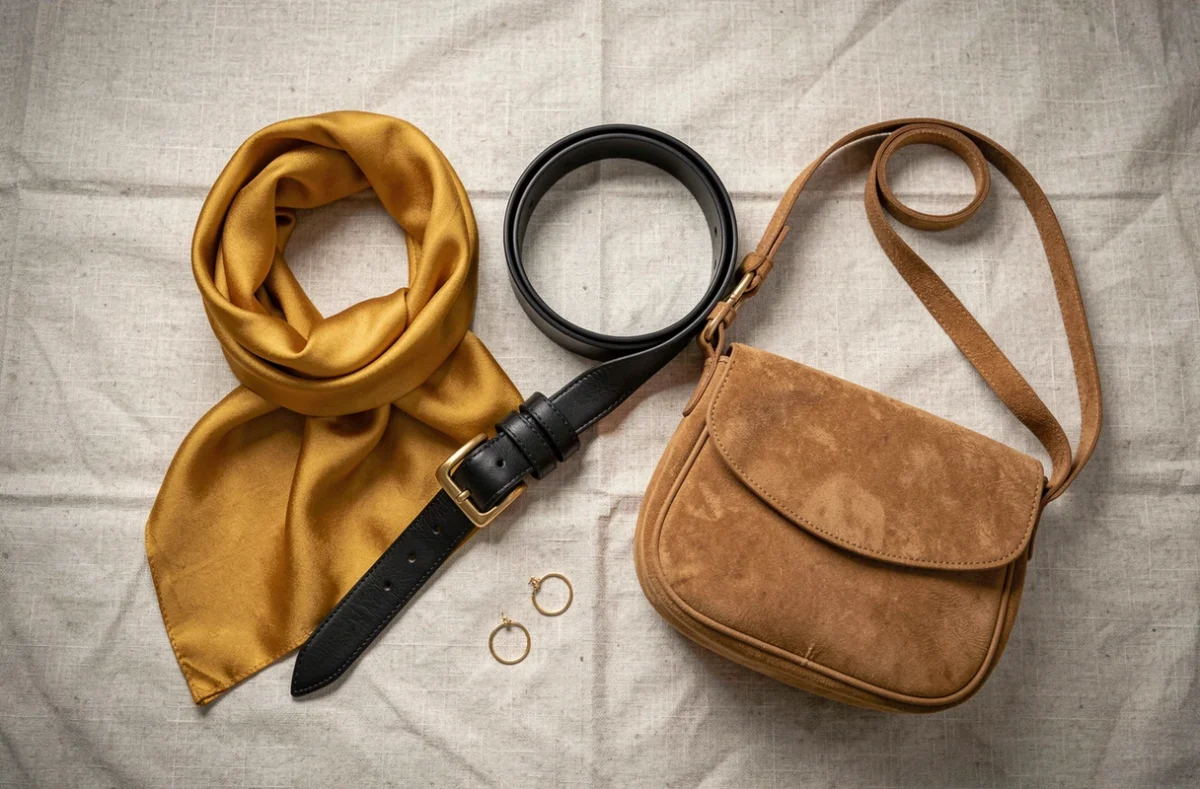
- Mid-season: the silk scarf works well tied around the neck or attached to a bag, making it the most versatile piece in the accessory wardrobe.
Seasonal adaptation prevents accumulation. With three or four well-chosen pieces per season, rotation is sufficient to vary outfits over several weeks.
The European digital passport, when fully deployed, will facilitate comparison between accessories based on objective criteria: composition, durability, repairability. Until then, checking the material, testing the finishes, and considering proportions remains the most reliable filter before any purchase.