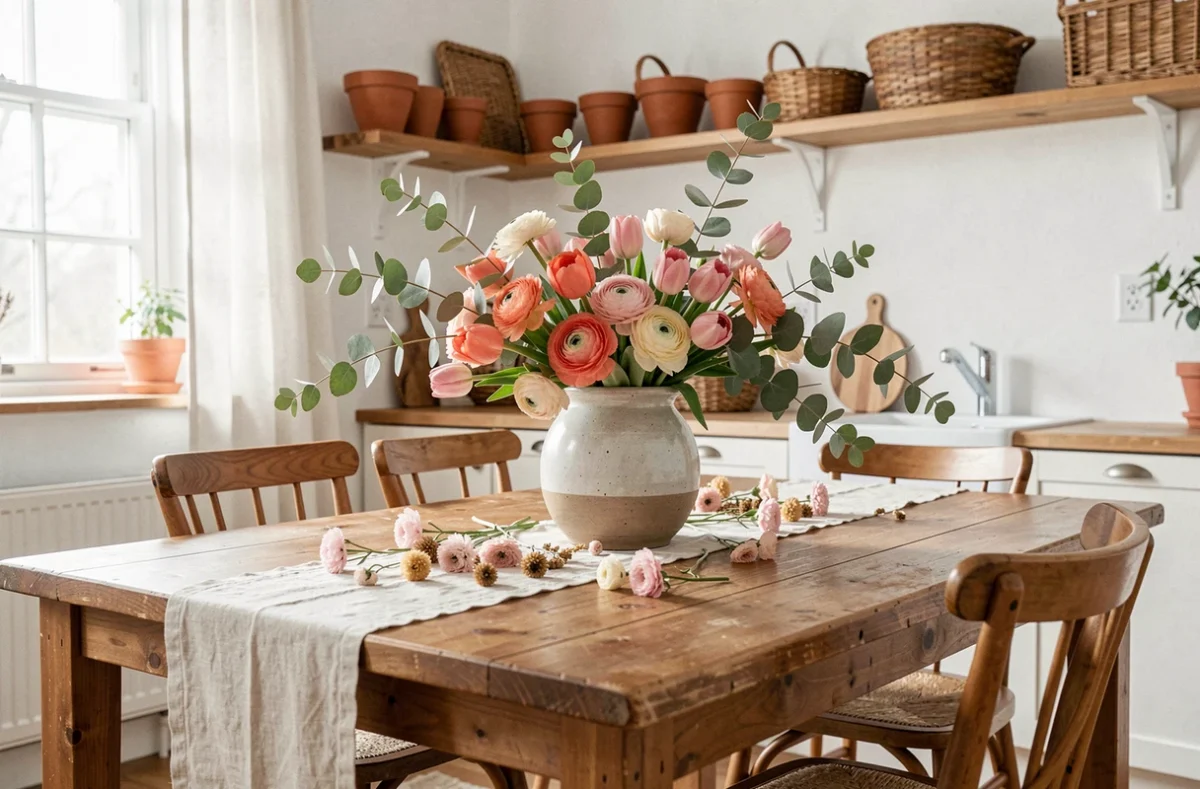
A 25 m² studio where the winter furniture hasn’t moved since November, shelves piled with chunky candles and dark throws: the first step to bringing spring into your home is to clear things out before decorating. Removing one bulky item frees up more light than adding three new ones, and in a small home, every clear surface counts.
Rearrange before decorating: the first step in a small home
Start with the walkways. Move an occasional chair 40 centimeters closer to the wall, turn a narrow console table perpendicular to the window, roll up a thick rug and put it away: these simple changes open up pathways and let natural light reach the floor. In a hallway or entryway, simply removing an overloaded coat rack can change how spacious the area feels.
ASID’s 2025 trends report also highlights the return of vintage elements, handmade details and repurposed antiques in contemporary interiors. Reusing what you already own is becoming a design choice in its own right. A stoneware vase forgotten in a cupboard, a wicker basket once used for storage, an unassigned light wood frame: moved into the living area, these objects are enough to refresh the atmosphere without adding clutter.
At encoreleprintemps.com, you’ll find ideas based on this very principle of rotating items rather than accumulating them—an approach that works well in smaller spaces.
Spring color palettes: look beyond classic pastels
Almost every competitor talks about dusty pink and seafoam green. These shades work, but they’re not the only option. A January 2025 article in Floor Covering Weekly reports that professionals were anticipating growing interest in earthy tones, textured browns and yellows, alongside brighter colors.
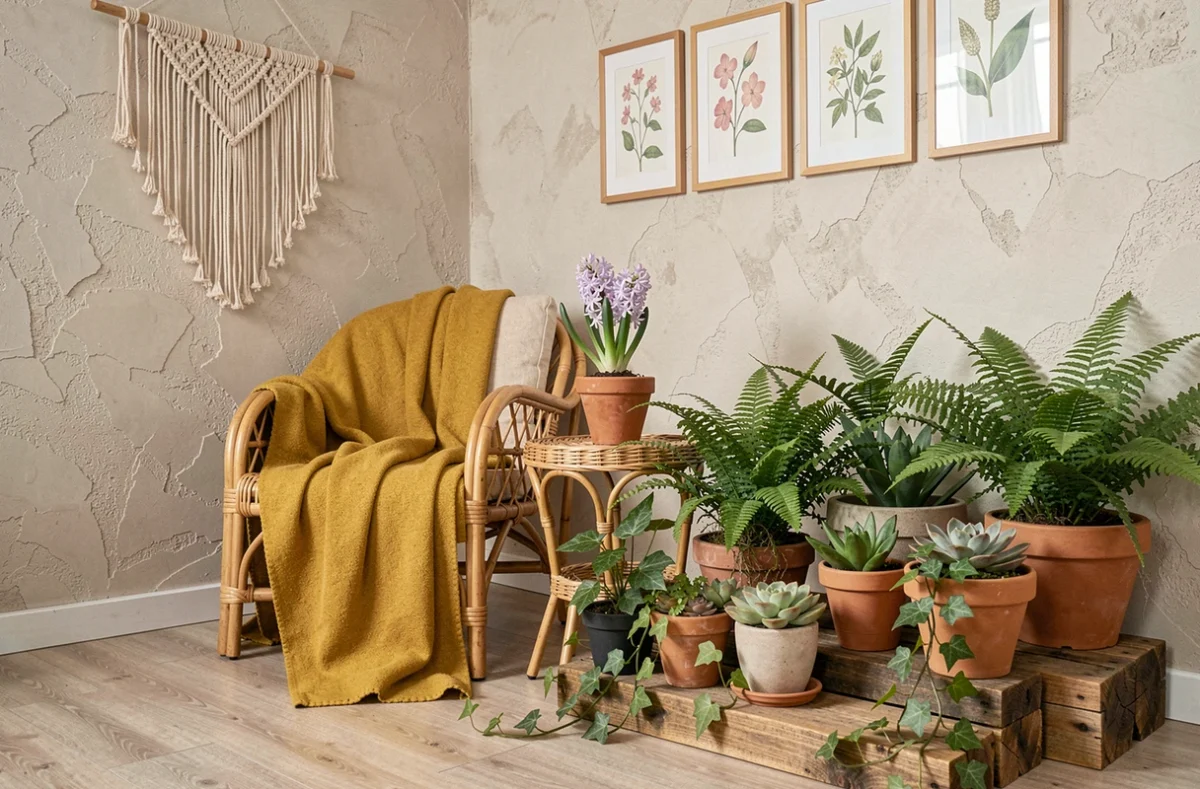
In practice, you could pair a mustard-yellow cushion with an ecru linen cover and a small pot in raw terracotta. The contrast between a warm base (brown, terracotta) and a bright accent (lemon yellow, apple green) creates a springtime feel without looking like a pastel postcard.
Add color in light layers
In a small home, avoid repainting an entire wall on a seasonal whim. Textiles are the most flexible way to add color:
- Washed-cotton cushion covers, swapped in seconds, in complementary shades (warm yellow and sage green, for example)
- Colored linen tea towels and placemats in the kitchen, replacing plain winter versions for just a few dollars
- A lightweight cotton-gauze throw draped over the arm of the sofa rather than spread out, so it doesn’t make the living room feel visually heavier
The goal is to layer in touches of color without overwhelming the eye. No more than two bright shades per room are needed to signal the change of season.
Flowers and houseplants: what really works in an apartment
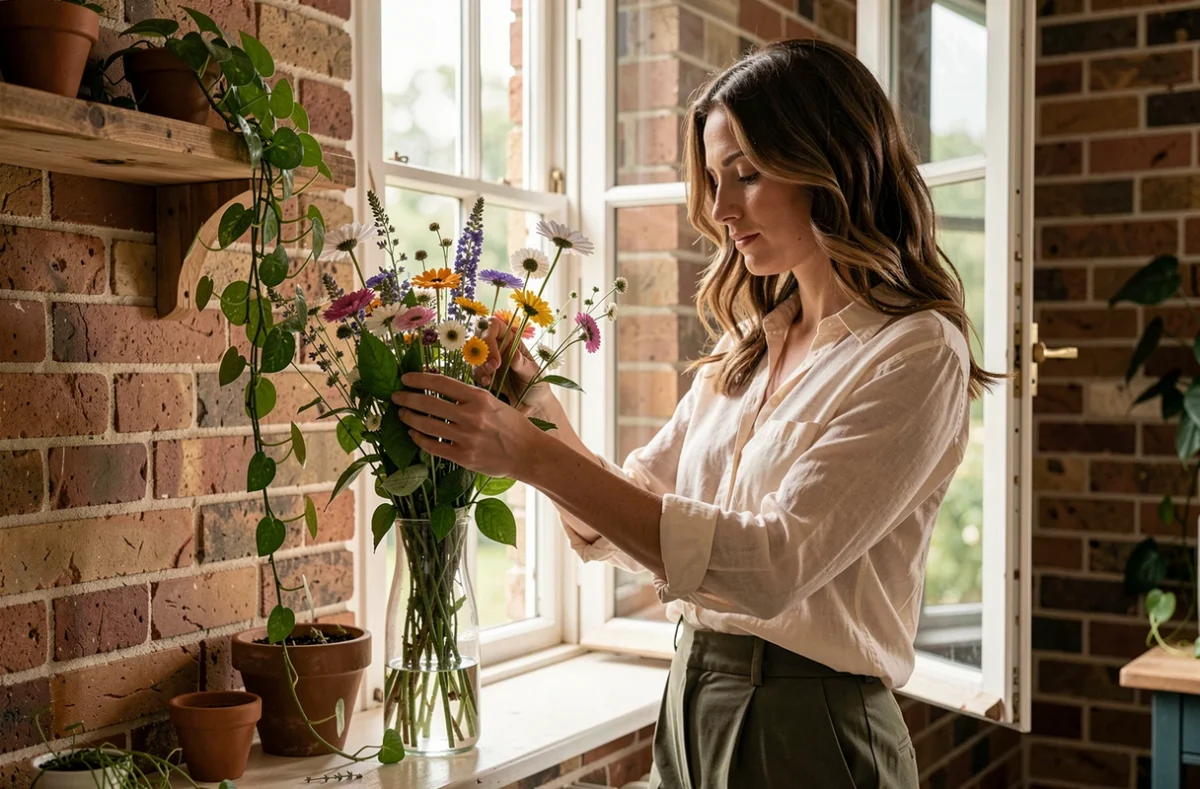
A bunch of tulips on the table, a few sprigs of forsythia in a pitcher: fresh flowers are still the most direct way to bring spring indoors. The downside is how long they last. Replacing them every week can quickly add up.
Dried flowers offer a longer-lasting alternative. A bouquet of grasses mixed with a few strawflowers adds volume without requiring any upkeep. Place it up high (on a shelf or cabinet) so it doesn’t take up counter space.
Houseplants: for looks, not air purification
A 2020 scientific review concluded that, at the concentrations typically found in homes, potted plants don’t remove pollutants quickly enough to measurably improve indoor air quality. When it comes to freshening the air, ventilation is still the practical choice. In other words, choose a plant for its shape, color and presence in the room—not for a hypothetical health benefit.
In a small space, a single medium-sized plant (a peace lily or spider plant) placed near the window makes more of a visual impact than five small pots scattered around, which break up the space. One well-placed plant is better than five scattered pots.
Natural light and raw materials: create an inviting feel without buying new
Light is the most important material in spring decorating. Wash the windows, swap heavy curtains for a sheer white cotton voile, clear the windowsill: these free changes can transform a room.
As for materials, light wood, rattan, handmade ceramics and raw linen make a cohesive foundation. You don’t need to replace everything. Take a wooden tray out of the cupboard and place it on the coffee table with a small bouquet and a candle to create a springtime focal point in two minutes.
Avoid visual clutter
In a small home, each decorative object takes up a proportionally larger part of the field of view. A practical rule: remove one winter item for every spring addition. Put away the smoky-glass candle holder and replace it with a small light stoneware vase. Fold up the thick wool throw and swap it for a gauze one.
This rotation principle prevents the buildup that, in a 30- or 40-square-meter home, can end up stifling exactly the light and airiness you were trying to create.
The most successful spring decor is often the kind you barely notice: a brighter interior, clear pathways and two or three touches of color that are enough to change the atmosphere without turning your home into a seasonal showroom.