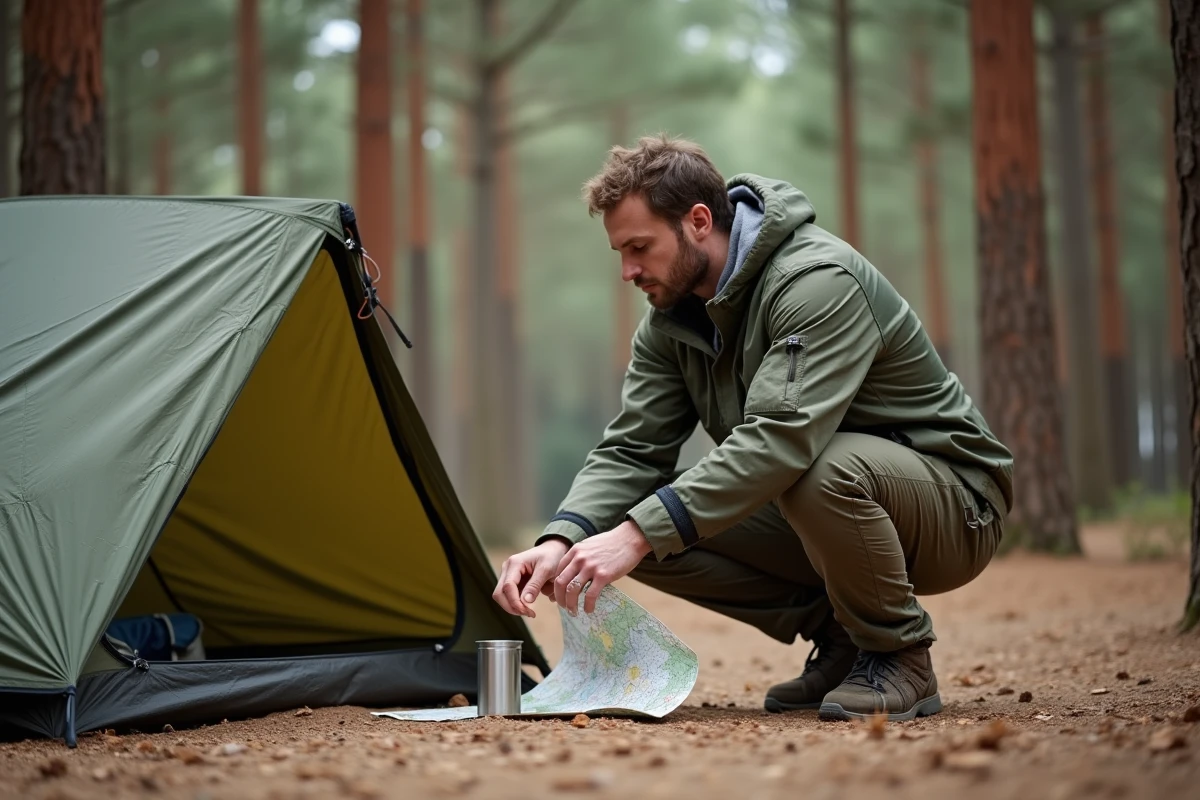
Pitching your tent under the maritime pines, falling asleep to the sound of the wind in the treetops, and leaving the next day without a trace: bivouacking in the Landes attracts hikers, cyclists, and families seeking unspoiled nature every summer. However, the department remains one of the most regulated in France regarding forest fires, which radically changes how to prepare for a night outdoors.
Fire Risk and Bivouacking in the Landes: A Constraint That Cannot Be Avoided
The Landes forest covers a considerable area, predominantly made up of maritime pines. This resinous cover makes the massif particularly flammable starting in June.
Since 2024, the Landes prefecture has strengthened summer patrols in the forest to prevent fires linked to wild bivouacking. A prefectural decree dated June 15, 2024, outlines preventive measures, with clearly identified risk zones where all fires are prohibited.
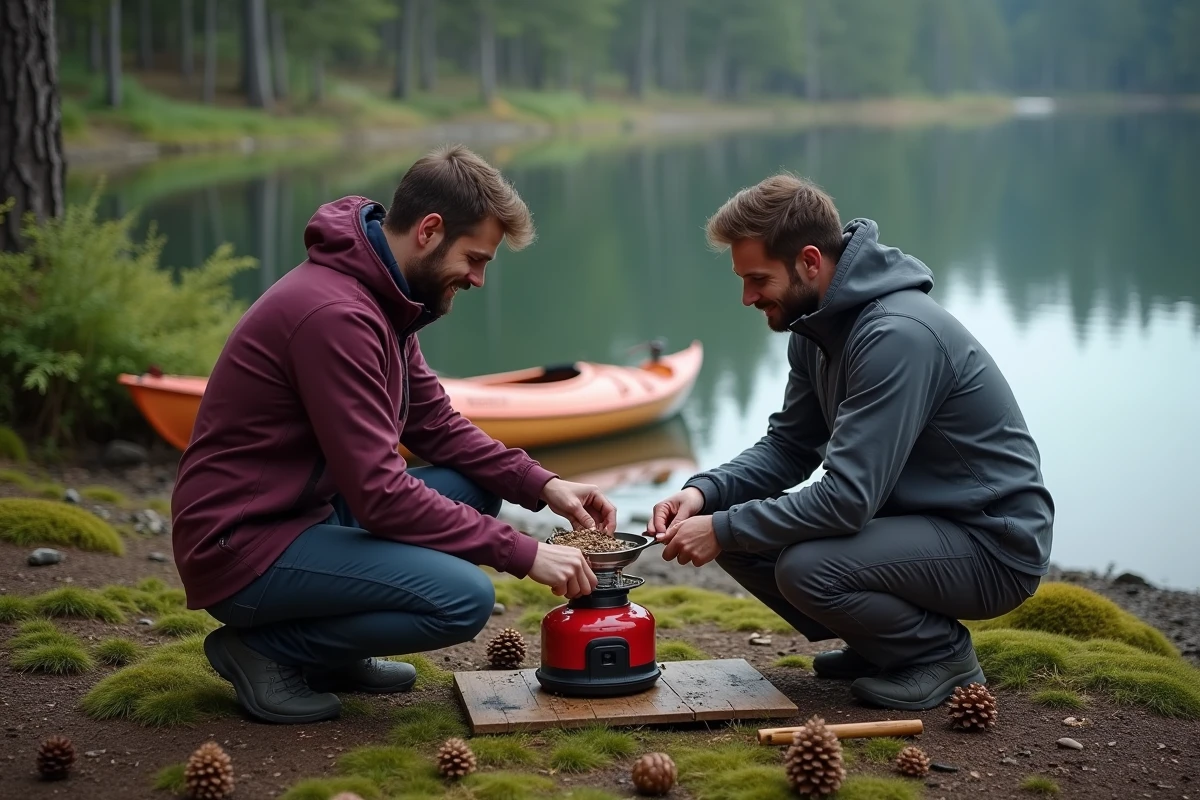
In practice, bivouacking in the Landes during summer means giving up open flame stoves in most forest areas. Gas stoves with built-in windshields remain tolerated in certain areas, but caution requires checking the current restrictions before each outing with the town hall or the National Forestry Office.
To find spots for bivouacking and wild camping in the Landes under good conditions, it’s better to target areas near lakes or waterways, where the sandy soil and ambient humidity reduce the risk.
Bivouacking Allowed in the Regional Natural Park of Landes de Gascogne: What the Decree Really Allows
Are you wondering if bivouacking is legal in the regional park? The answer depends on the duration and behavior.
Since 2023, a regional decree for Nouvelle-Aquitaine grants a tolerance for bivouacking for less than 24 hours in the Regional Natural Park of Landes de Gascogne. Two strict conditions apply: leave no trace and stay away from water points.
This tolerance does not equate to a general authorization. Setting up a tent for several nights in the same spot falls into wild camping, which is subject to more restrictive rules. The distinction between bivouacking and wild camping hinges on this 24-hour threshold and the absence of facilities (no tarps fixed to trees, no furniture).
Where to Pitch Your Tent Without Risking a Fine
The most suitable areas for bivouacking in the park are located away from marked trails, on communal plots. The idea is to set up your tent at sunset and leave early in the morning.
- The banks of the Leyre offer shaded and flat spots, provided you stay several meters away from the watercourse to avoid any pollution
- The clearings at the edge of the state forest, accessible from hiking paths, allow for bivouacking on stable and well-drained ground
- The shores of the Landes lakes (Biscarrosse, Parentis, Sanguinet) attract bivouackers, but the banks are often regulated by municipal decree: always check
The park also launched in 2025 dedicated bivouac areas to channel visitor traffic and limit damage. These areas, marked on the ground, offer a compromise between freedom and legal framework.
Protecting the Dunes: The Blind Spot of Bivouackers on the Landes Coast
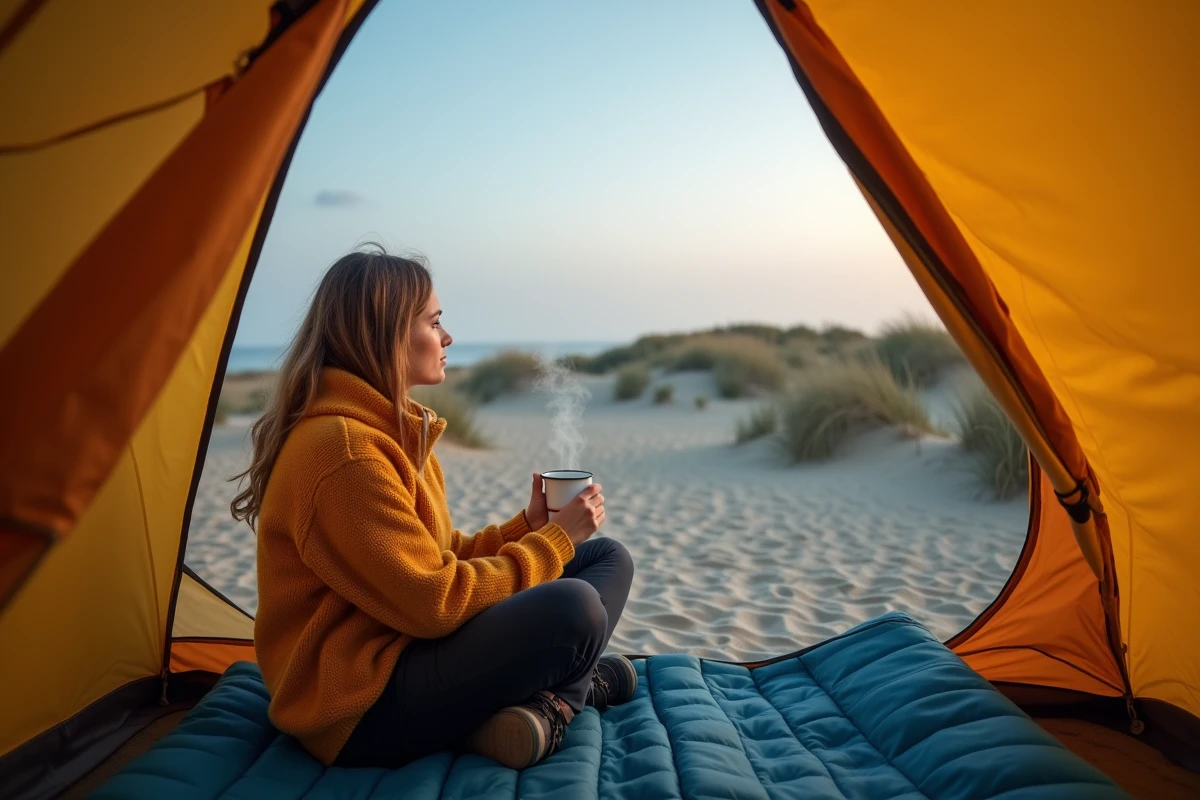
The temptation to sleep facing the ocean, in the dunes, returns every summer. The damage observed in recent years has prompted authorities to intensify awareness campaigns in 2025 and 2026.
Foot traffic destroys the lyme grass in just a few passes, this grass that stabilizes the sand and prevents erosion. A tent placed on a dune for one night is enough to create a bare sand area that will take several seasons to recover.
Bivouacking on the Landes coast therefore requires staying on the beach sand, below the dunes, or better yet, favoring forest areas away from the dune cordon. Spending the night on the beach itself is also subject to municipal decrees, which vary from one municipality to another.
Extreme Weather in the Landes: Adapting Your Bivouac to Storms and Heatwaves
Travel guides present the Landes as a mild and sunny territory. The reality is more nuanced for those spending the night outdoors.
Storms and Strong Winds
Atlantic storms hit the Landes coast with gusts that make any lightweight tent vulnerable. A freestanding tent with long stakes (at least 20 cm) is essential on sandy ground. Prefer a location under forest cover, which breaks the wind, rather than an exposed area.
Summer Heatwaves
In the height of summer, temperatures inside a tent rise quickly in the pine forest, where the resin traps heat. Here are some practical tips:
- Choose an east-facing spot to benefit from shade by mid-morning
- Bring at least three liters of water per person per night, as drinking water points are rare in the forest
- Opt for a double-walled tent with good ventilation rather than a closed tarp that traps body moisture
- Leave the site early in the morning to avoid direct exposure between 10 AM and 4 PM
Bivouacking in the Landes rewards those who accept its constraints. Respecting local regulations and dune ecosystems remains the condition for this practice to continue being tolerated. Before leaving, a quick visit to the town hall or a call to the local ONF takes five minutes and can prevent many disappointments.